
Get a lost or forgotten item sent home from Greece

Left something at a hotel, airport, ferry or taxi in Greece? How to get it sent to you, in Greece or back home, and what customs needs.

Where should it go?

  • Fira Old Port below the caldera cliffs

    Within Greece

    • 1–3 working daysUsual time within Greece; islands can take longer.

    Couriers we recommend →

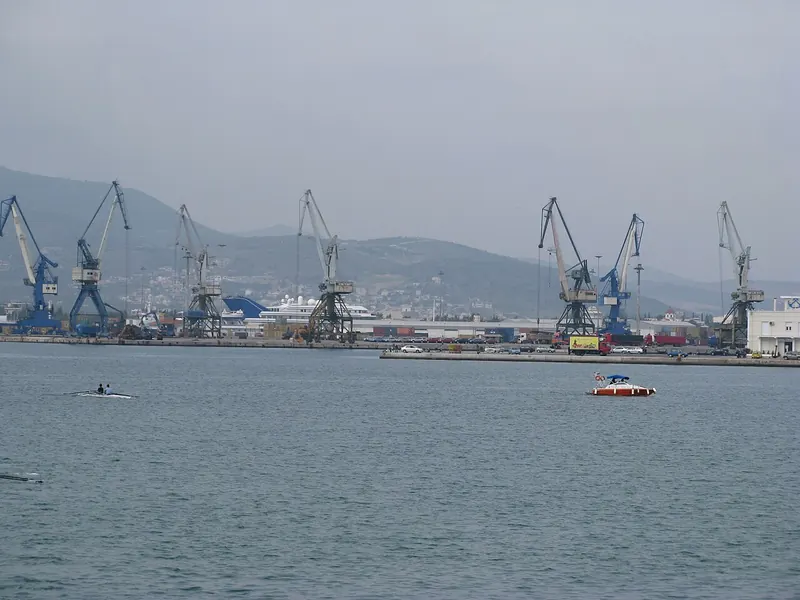
  • Port of Thessaloniki

    To another EU country

    • No customs checks between EU countries. Normal courier rules still apply.

    What you can send within the EU →

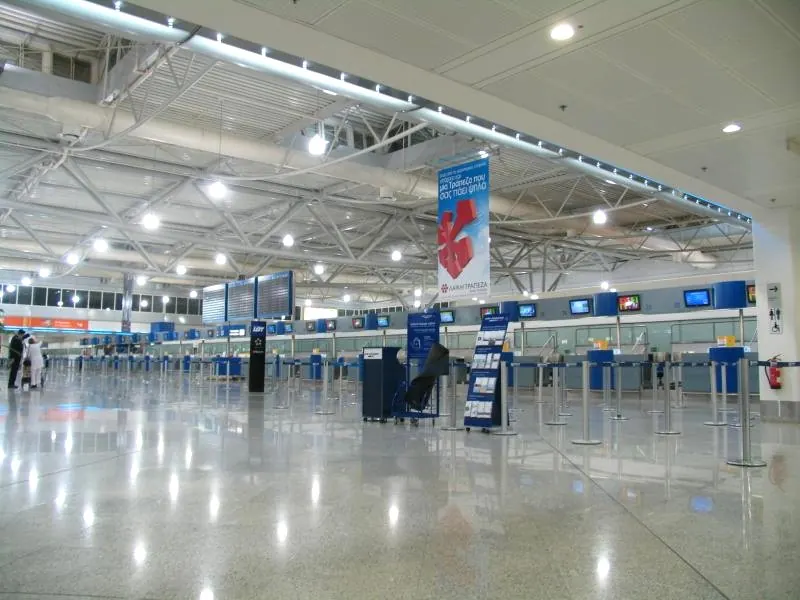
  • Interior of Athens International Airport terminal

    Outside the EU

    • The UK, Switzerland and Norway included: the parcel goes through customs.
    • Import duty is possibleThe receiver may pay it on arrival.

    Rules by country →

Step by step: from the office to your door

Lost-and-found offices in Greece keep found items but rarely post them. Someone has to collect the item, pack it and hand it to a courier. These five steps work for anything you left at an airport, a port, a hotel or with the police.

  1. Get a reference number

    Ask the office to keep the item and give you its reference number. Quote it in every call and email, and ask how long they will hold it.

    How long are lost items kept in Greece? →

  2. Ask how it can leave the office

    Ask whether they post items, or who may collect it for you. Police offices normally hand items only to the owner or to someone with the owner's written authorisation.

  3. Choose who collects it

    Someone you trust in Greece can collect it with your signed authorisation and a copy of your ID. If nobody can, a service we recommend can do the pickup. Offices usually work Greek office hours, and staff may answer in Greek.

  4. Pack it and describe it

    Couriers can refuse a suitcase that isn't packed in a box. Describe the contents as used personal belongings, not for sale, and list each item with a fair value. Add a copy of your passport and, if you have it, your boarding pass: it shows the item is yours.

  5. Book the delivery

    Give the courier the office's opening hours, your reference number and a phone number where you can be reached. If it leaves the EU, the courier sends customs data with your list of items. Some things are refused or held at customs, so check before it is packed.

    Check what can be sent →

Copy, fill in, send

Written in English for the office in Greece. Fill in the parts in [brackets].

Email to the office that has your item
Subject: Found item [reference number]: please keep it for collection

Hello,

I left [what it is: colour, brand] at [place] on [date]. Your reference number for it is [reference number].

Please keep it for me. How long can you hold it?

Do you send items by post or courier? If not, [name of the person or courier company] will collect it for me with my signed authorisation and a copy of my ID. What should they bring, and when are you open?

Thank you,
[Your full name]
[Phone number with country code]
Authorisation letter for whoever collects it
Authorisation to collect a found item

I, [your full name], passport or ID number [number], authorise [name of the person or courier company], [passport or ID number of the person collecting], to collect the following item for me from [office or company holding it]:

Item: [what it is: colour, brand]
Reference number: [reference number]
Left on [date] at [place]

A copy of my passport or ID is attached.

[Place], [date]

Signature: ______________________
[Your full name]

What can you usually send from Greece?

Phones, laptops and batteriesUsually limited
  • Lithium batteries - installed in equipment versus loose. For air transport, IATA/ICAO separate UN3480 (lithium-ion batteries alone) and UN3090 (lithium metal alone) from UN3481/UN3091 (packed with or contained in equipment). A Singapore CAAS guide (2022) states standalone UN3480 and UN3090 batteries are forbidden as cargo on passenger aircraft and may travel on cargo aircraft only. Contained-in-equipment is packing instruction 967 for UN3481. Express couriers may require pre-approval for lithium batteries, loose or with equipment, and do not accept damaged, defective or recalled ones (small installed-in-equipment shipments may qualify for exceptions).
MedicinesUsually limited
  • Prescription medicines are generally refused by couriers; controlled substances are barred from post. Major couriers generally do not accept prescription medicines from private senders. Narcotic drugs and psychotropic substances as defined by INCB may not be placed in postal items under the Universal Postal Convention. UPU and INCB signed a cooperation agreement in 2018 to keep posts from carrying illicit drugs. A forgotten medicine usually has to be left out of the parcel or sent only by a route the destination's health authority permits.
Cash, gold and jewelleryUsually not allowed
  • Cash in parcels is prohibited by carriers and can trigger EU cash-control rules. Couriers list cash and bullion among prohibited items. Under Regulation (EU) 2018/1672, unaccompanied cash of EUR 10,000 or more sent by post or courier can trigger a disclosure declaration within 30 days and the cash can be detained meanwhile. A forgotten wallet should be sent without cash.
Documents and dataUsually not allowed
  • Passports and ID documents are refused or restricted by couriers. Many couriers do not accept passports and direct them to the police or the embassy; others accept them, and destination countries may add bans. Some countries require passports to go by hand or through a government channel.
Antiques and cultural goodsUsually limited
  • Antiquities and cultural goods need an export permit. Greek Law 4858/2021 (FEK A' 220/19.11.2021) codifies the protection of antiquities and cultural heritage, sets the terms for legal import and export of cultural goods and lists illegal export as a criminal offence. Exporting an antiquity or cultural object requires a permit. For the permit procedure, ask the Ministry of Culture, the competent authority.
Customs paperwork
  • Postal customs forms CN22 and CN23. CN22 is the small-item postal declaration and CN23 is the fuller one. CN22 is usually for small items (often up to 2 kg and roughly EUR 425); CN23 can be used for any postal item. The post office or courier's online label tool produces these documents for non-EU parcels.
  • Courier parcels, and postal parcels worth EUR 1,000 or more, are declared differently. Express goods under the EUR 1,000 threshold are handled at the customs office of exit; the postal rule does not cover them. EU postal operators say items of EUR 1,000 or more need a CN23 attached and must be declared to customs. When a full export declaration is lodged, the system issues an Export Accompanying Document (EAD) that travels with the goods to the EU office of exit, where exit is confirmed electronically. A Greek procedure for express couriers (AADE circular E.2011/14-02-2025, commercial goods up to EUR 1,000) applies; the carrier normally files, so the sender supplies accurate value and description.
  • Postal parcels up to EUR 1,000 are treated as declared on leaving the EU. Under Art. 141(4)/(4a) of Delegated Regulation (EU) 2015/2446, goods in a postal consignment with an invoice value of EUR 1,000 or less sent as an outright export are deemed declared for export when they leave the EU customs territory. Consignments subject to prohibitions or restrictions (for example dual-use goods) are excluded.
  • Safety and security data is required for goods leaving the EU even without an export declaration. When no customs export declaration is required, an Exit Summary Declaration (EXS) with safety and security data must be submitted at the customs office of exit; when an export declaration is required, that data goes with it. Filing responsibility usually sits with the carrier. Some carriers, including the Greek post, return non-EU parcels sent without this electronic data.

These are the usual rules. Customs and courier rules can change at any time, so confirm with the customs authority before sending.

Sending it abroad: rules by country

What customs allows, what it may cost and what the courier needs, country by country.